

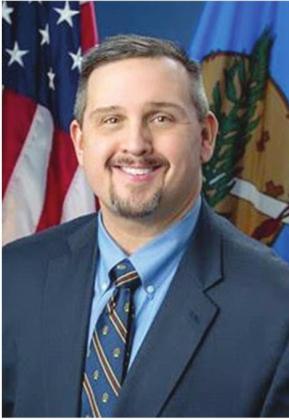
District Attorney Allan Grubb has been subpoenaed to appear before a Multi-County Grand Jury.
Court documents state that “Mr. Grubb was personally informed by the Office of the Attorney General that the purpose of the subpoena is for “Oppression in Office” and “Willful maladministration,” and they sought his removal from office as District Attorney.”
Grubbs was served on July 7 for witness testimony before the MCGJ on Tuesday, July 19 at 8:30 am.
Grubb’s attorneys, David T. McKenzie (Shawnee) and Robert D. Gifford, II (Oklahoma City) filed a motion to quash. Found in the petition, under Statement of the Case it states “MCGJ has limited jurisdiction, and the removal of officers from office is not one of the authorized powers. It goes on to say that Title 22 speaks directly to the removal of a district attorney, and only a Grand Jury, not a Multi-County Grand Jury is authorized by statute. The final statement in this part of the seven-page document states, “The Multi-County Grand Jury subpoena must be quashed as it is without jurisdiction and statutory authority.”
An Emergency Stay was also filed, stating, “If the court rules in favor of the Appellant (Grubb) and the court does not stay these Multi-County Grand Jury proceedings, he will suffer irreparable harm from having to testify and face possible indictment for removal.”
The “judge overruled all motions filed and delayed Grubb’s testimony until Thursday, July 22, 2022, at 9 am to seek relief in this court.”
Yes, Thursday is July 21, but the court document lists the information as Thursday, July 22.
The referenced statutes and additional findings can be found below. The Countywide & Sun will continue to follow this. Check back next week for additional information.
The petitioner’s document refers to §22-1181, which goes to the Grand Jury to the district court of the county where the officer is elected, appointed, or resides is the statutes that would cover his position and the stated grounds for possible removal.
§22-1181. Causes for removal of officers.
Any officer not subject to impeachment elected or appointed to any state, county, township, city, town, or other office under the laws of the state may, in the manner provided in this article, be removed from office for any of the following causes:
First. Habitual or willful neglect of duty.
Second. Gross partiality in office.
Third. Oppression in office.
Fourth. Corruption in office.
Fifth. Extortion or willful overcharge of fees in office.
Sixth. Willful maladministration.
Seventh. Habitual drunkenness.
Eighth. Failure to produce and account for all public funds and property in his hands, at any settlement or inspection authorized or required by law.
The document states that the Oklahoma legislature has outlined the limited jurisdiction of the Multi-County Grand Jury under §22-353 and that his limits the subject matter jurisdiction to the following:
§22-353. Jurisdiction.
A. The jurisdiction of a multicounty grand jury impaneled under the Multicounty Grand Jury Act shall extend throughout the state, including but not limited to, a single county as designated in the State Supreme Court’s order convening the multicounty grand jury.
B. The subject matter jurisdiction of the multicounty grand jury shall be limited to:
1. Murder; 2. Rape; 3. Bribery; 4. Extortion; 5. Arson; 6. Perjury; 7. Fraud; 8. Embezzlement; 9. Manufacturing, distribution, dispensing, possession or possession with intent to manufacture, distribute or dispense, a controlled dangerous substance, or any other violation of Section 2-101 et seq. of Title 63 of the Oklahoma Statutes; 10. Organized crime, which for purposes of the Multicounty Grand Jury Act, means any unlawful activity of an association trafficking in illegal goods or services, including but not limited to, gambling; loan sharking; controlled dangerous substances; labor racketeering, or other unlawful activities; or any continuing criminal conspiracy or other unlawful practice which has as its objectives improper governmental influence or economic gain through fraudulent or coercive practices; 11. Public corruption, which for purposes of the Multicounty Grand Jury Act, means any unlawful activity under color of or in connection with any public office or employment of any law Oklahoma Statutes enforcement officer, public official, public employee, candidate for public office, or any agent thereof; 12. The registration or failure to register securities; 13. The offer or sale of securities; 14. The sale or purchase of goods or services by or for the state or any political subdivision thereof, or the misappropriation of funds belonging to or entrusted to the state or any political subdivision thereof; and 15. All character and grades of crime pursuant to Section 18 of Article II of the Oklahoma Constitution.
However, if you back up to §22-350, The Multicounty Grand Jury Act, referenced in the petition, the first paragraph states:
§22-350. Multicounty Grand Jury Act - Conflicting provisions.
This act shall be known and may be cited as the “Multicounty Grand Jury Act”. All matters not specifically governed by the provisions of the Multicounty Grand Jury Act shall be subject to the provisions governing grand juries. If the provisions of the Multicounty Grand Jury Act conflict with the provisions governing grand juries, the provisions of the Multicounty Grand Jury Act shall govern.
Oklahoma §22-351 A. 1. goes on to say, “Whenever the Attorney General considers it to be in the public interest to convene a grand jury with jurisdiction extending beyond the boundaries of a single county, he or she shall file a verified application with the Chief Justice of the Supreme Court, or with such Justice of the Supreme Court as is designated by rule to receive such application.
Keep reading, and Oklahoma §22-351 A. 3. states, The Supreme Court, within fifteen (15) days, shall determine whether or not to issue an order convening the multicounty grand jury. If an order is issued convening said jury, the purpose or purposes shall be set forth in such order.
B. An order granting the convening of a multicounty grand jury issued under subsection A of this section shall:
1. Convene a multicounty grand jury having jurisdiction over any subject matter listed in Section 353 of this title which occurs in any single county or in multiple counties of this state approved by the Supreme Court and requested in the application by the Attorney General;...
There is much more to the statute, but that appears to be the pertinent information for now.
