


Child abuse is a crisis that demands immediate attention and action. Child Abuse Awareness Month is not just a time for reflection—it’s a call to support those on the front lines fighting for the safety and well-being of children.
In 2024, Department of Human Services data shows a total of 70,706 alleged victims in Oklahoma; 50,995 victims of neglect, 13,941 suffered physical abuse, and 3,770 were sexually abused. In Pottawatomie and Lincoln counties, there were 2,532 total alleged victims with the majority of those victims, 1,883, being reported in Pottawatomie County.
According to the 2019-2023 Child Maltreatment Report from the Administration for Children and Families, 53,127 children in Oklahoma received an investigation in 2023, and 10,290 were first-time victims. In the five-year span, there were 126 child fatalities.
Last year, the Child Advocacy Center of Central Oklahoma (CACCO) interviewed 389 children. When visiting with the CACCO on Tuesday, Apr. 8, the center had completed 101 child forensic interviews between Jan. 1 and Mar. 31, 2025. There were already 50 scheduled interviews on the books for April. This did not include any of the acute (emergency interviews), which they have completed 10 as of Apr. 9. Ten acute interviews on four separate cases. In March, eight acute interviews were completed on five different cases. Multidisciplinary team members expect that number to rise exponentially with the changes to the hearsay law passed last year. The changes allow law enforcement to charge domestic violence in the presence of minors, even if the child is not physically harmed. This also means more children will be forensically interviewed about the domestic violence or homicides that they witness in their homes.
For many years Vanessa Guinn was the only forensic interviewer in our area. She has been performing this service for 15 years. When visiting with ADA Lori McConnell last week, McConnell said, “We are lucky to have Vanessa, who’s an amazing forensic interviewer. She’s the best forensic interviewer witness I’ve ever put on the stand. She’s fantastic!”
What is a forensic interview? It is a structured, developmentally appropriate conversation conducted in a child-friendly setting, often at a Child Advocacy Center, where the child feels comfortable and secure. Interviewers are trained professionals who understand how to interact with children and ask questions that are sensitive to their developmental level and potential trauma. Forensic interviewers use open-ended non-leading questions to encourage the child to share their experience in their own words.
Guinn said when she graduated college she went to work at the Department of Human Services (DHS) as a Child Protective Services investigator. In this role, she was able to observe forensic interviewing and had experienced it as a child. “When the opportunity arose to go to training, it was something I really wanted to pursue.”
She said at that time, the Unzner Center relied on volunteer interviewers, mainly police officers conducted the interviews.
Guinn left DHS and began working for Child Support Enforcement which was under the District Attorney’s Office which she said was the “worst job in the world. There was so much math.” However, she was able to begin doing interviews with more experienced interviewers. She did this for about two years.
Then an opportunity became available to apply for the first VOCA (Victims of Child Abuse) grant. She said the Unzner Center had never had a VOCA grant.
“I helped write the first VOCA grant for the Unzner Center and it was awarded and I became the first full-time forensic interviewer that the Unzner Center had ever had,” said Guinn. “I had no idea what I was getting myself into. I really believe in the practice of forensic interviewing.”
“I think sometimes the child’s words and experiences are lost in policy and protocol and investigation,” continued Guinn. “I think it’s hard for children to relate their experiences because their ability to relate is inhibited by the languange barrier of being young. They are inexperienced in the world, and so adults don’t always understand what their experiences are, or discount their experiences because they don’t relate it the way adults think they should be able to.”
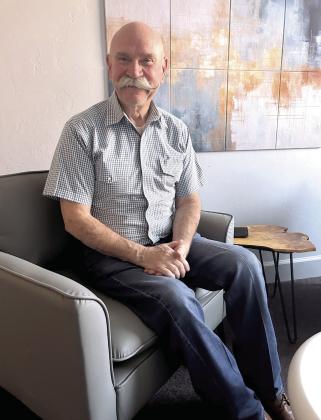
CACCO now has two forensic interviewers. Tom Pringle has completed 127 interviews over the last six months, “which is nothing compared to Vanessa,” said Pringle. “But I got my 100 milestone.' Pringle spent 41 years in law enforcement, retiring from the Shawnee Police Department and then working as the McLoud Chief of Police.
He said during his time with the Shawnee PD he met Vanessa at the Unzner Center. As the McLoud Police Chief, he brought others to the center to meet the staff.
Tom said he was diagnosed with cancer, three different types. He was “relieved of duty at McLoud. He began working for the District Attorney’s Office on a grant, but ended up resigning “because I couldn’t work the grant. I was going to be gone for treatment and stuff. And it gave me a reason not to be there anymore.' He then went to work for the Citizen Potawatomi Nation.
Pringle said he spent two years going through chemo, radiation, and multiple surgeries. “God literally brought me through all that. I got over it and was home on the couch watching TV. I thought this is not what I’m going to do after what I’ve been through. This is not paying anything back. This is not what I was meant to do, not after God brought me through all that.”
After raising kids of his own and before being diagnosed, Tom and his wife fostered and then adopted two boys. They were five and eight when he was diagnosed. He also cares for his 96-year-old mother who lives with them. “I was looking for something that would fit all of my life. A job where I could manage the kids and my mom and doctor visits and the stuff I still had to go through. I had been praying about it and God opened this door for me. I really believe that.”
Guinn and Pringle both said they love this job. Pringle was asked to elaborate.
He said, “I love giving back. For me, this is a way that I can give back and help. When I was a police officer, I loved being a police officer. That was my niche, but I was physical and was younger and could get out there and try to make an impact. I don’t have those abilities anymore, but I still have my mind. I still have the desire. I still have that fire that I want to give back, and I want to help.”
Pringle explained that after their children were grown he and his wife fostered, “then we adopted two little boys, siblings and I just think the world of them and love them to death. But that put me on a path. There’s a lot of these kids out there. My kids had been abused, so they came out of that scenario. I can help here and actually might be able to do some good and help these kids. It makes me feel good when I get their trust and they talk to me, they tell me what’s going on. It’s tiring and tough, but it’s something that God put in me to do. It’s something that I love because I feel like I’m helping these kids somehow. I would not do it as a social worker. I could not do that job, but I can do this job.
The Countywide & Sun asked a few questions of Guinn and Pringle about different aspects of their job.
Q: How do you adjust your interviewing techniques based on the child’s age and developmental level?
Guinn: In forensic interviewing, no matter what protocol you’re utilizing, the first part of the interview process is what they call rapport. During rapport, not only are you kind of creating comfortability with the child, but you are gauging their developmental age, and their ability to understand and respond to questions and prompts that you give them. You can’t just go in and judge based on their calendar age what their understanding or ability to relate experiences are. So sitting down and speaking to that child about neutral subjects, like usually school, who their best friend is, interests, sports, video games, whatever it is, helps to gage their ability to sit down and engage in the interview process, and helps me understand their cognitive abilities, their language abilities.
Pringle: By literally talking to them and letting them just get used to me sitting there and introducing myself. I tell a lot of them what my interests are. I give them the opportunity to ask me questions. It’s a two-way conversation. I sit on the floor with them. I get down off the seat, and I get down on the floor, and I just start visiting and let them get used to me.
Q: What steps do you take to ensure that a child’s statements are legally admissible in court?
Guinn: With the new child hearsay laws, that’s expanded the cases we can see. So it’s not just victims, it’s children that witnessed the abuse. So you have to have ChildFirst and NCA (National Children’s Alliance), those are the protocols most commonly used in Oklahoma. So you have to utilize a protocol that’s been approved by the courts and then go through those steps that, based on protocol, can’t be leading. I think, over a dozen protocols that are utilized in Oklahoma, most commonly ChildFirst and NCA, and the foundation of all of them is not leading. You can’t ask leading questions.
ChildFirst protocol says children under seven, you don’t ask for specific times. You can ask for markers in time, like before or after Christmas, but they can’t answer how many times or when that happened. And so we can only ask questions that allow for a child’s credibility or ability to answer.
Q: How do you collaborate with law enforcement and prosecutors to ensure the interview aligns with the investigative needs?
Guinn: NCA, which sets our standards for excellence, asks that we do pre-staffing prior to any forensic interview, and we rely on our advocates a lot to speak to caregivers to understand if that child has any developmental delays, if there’s been some recent trauma, house burning down, a parent, dying, etc, and then understanding kind of where that child is at the time, if they made a disclosure, yet if they’re an active disclosure. And so that’s really important. If law enforcement refers a case and says, you know, this child reported to their counselor, this child reported to their teacher, this child basically has made a choice that they’re ready to talk about this, then we know they’re an active disclosure.
If it’s something like they told the friend and the friend told or we found a journal, then we know most likely they’re not an active disclosure, and we call it tentative disclosure, so we know that they’re not really ready to talk about it, so anticipate that we’re going to get a lot of I don’t knows. I don’t remember, all those hallmarks of tentative disclosure. So understanding, has this child disclosed? How has this information come out? Is really important. Then we sit down to that pre-staffing, get that information, who’s this perpetrator to this child? How long have they been in this child’s life? So we understand what that relationship is.
Then, if it’s a younger child, where there may be some kind of speech delay, understanding who’s in the home, what their names are, how you pronounce the name. So that way, if that if it’s a three-year-old, four-year-old that goes in there and says, mom’s name is Shelby, but can’t really say Shelby, then I’m able to say Shelby, and they’re like, yes, and that helps just expedite that process. And so that information is really important to get.
Pringle: Well, I use the protocols of ChildFirst for the interviewing, but I collaborate. We have pre-staff meetings, and I collaborate with law enforcement and DHS. We go over the reports and the referrals and see what information, what kind of case that they’re looking at; Whether it’s neglect, domestic violence, sexual abuse, whatever it is. And we go over the parameters. And we go over the things that they don’t have in the report that they need, information, details, clothing, this kind of thing. If there was anywhere they were in the house. How the situation was. So I get a list of the things they need for the case to be presented to the district attorney’s office prosecution. I geared a lot of the conversation to that area, whether domestic violence, what you had for dinner last week, or for breakfast this morning. Who cooks your meals? Who makes your lunches? What do you have in the refrigeration? Are there any places you go shopping with your mom or your dad? Or a lot of the topic questions to the type of abuse or the type of information that’s needed and meeting that object back with law enforcement and DHS towards the very end of the interview to make sure I’ve got the information that we need.
Why does the community need to know about this program, the Child Advocacy Center, and what you do? Why is this important?
Guinn: I think a lot of times children aren’t seen as full and whole humans like adults, and their experiences are discounted. They’re called liars, where you wouldn’t call an adult a liar about experiences. I think a lot of that goes back to the way children relate things because of their language barriers because they’re young, they’re still learning a language because they don’t understand the world enough to relate their experiences to explain them, and so their words are discounted and their experiences aren’t seen. I think giving a child a forum and a place to truly be seen and understood, and for the adults who are in charge of keeping them safe, being able to really see them and understand them and do what they have to do to keep them safe. And I think it’s the best way to get all the information we need to make sure a child is safe, that they’re heard and they’re seen, and we can give them the services they need to move forward and be healthy adults later in life.
This is the only place in both Pott. and Lincoln County that allows for that safe environment for the kiddos. With the whole goal of reducing trauma, we can’t prevent the trauma that’s occurred to them, but reducing it in whatever way we can.
Also, kids, they’re not going to talk to DHS. They have been conditioned their whole lives, you don’t talk to DHS, and so being able to bring them here, have DHS and law enforcement away. I’m not DHS, I’m not the police, and everything can be talked about.
I’m not going to tell your mom. I’m not going to tell your dad. I’m not going to tell your brother or sister, grandma or grandpa. This is a place for kids to come and just talk about what’s real and true, so they feel like their words are safe and protected, and then we stand behind that. We don’t tell Mom or Dad, and eventually, it gets to court and they find out. But I will never sit down with a parent and ever tell that parent anything that child exposed.
If that parent needs to know something about their health and safety, the advocate does it, but I never, ever sit down with a family member or caregiver and tell them anything that kid said, and that’s part of my job.
Pringle: I feel that we are the outlet for these children, and there are a lot of them, and that’s where I think that the community does not realize the amount of children that need a place that is neutral, that they can feel safe, and they only have to do it one time. They can get it off their chest. Get it told. They only have to do it one time instead of three or four. They can get counseling and get mental health therapy. They can get medical once they come here. It opens the door for a lot of services that can be provided for these kids. We provide that neutral, safe, play-oriented talk and let them say anything they want, In any way that they want, without the parents around and without any peer pressure. It’s just an open, safe place for them to talk to a professional and tell their story.
