

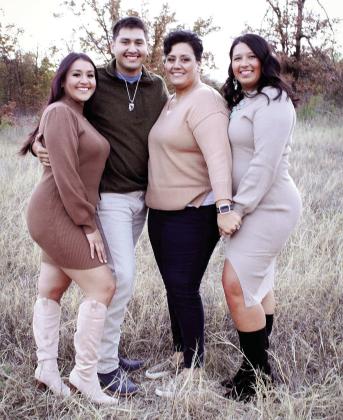
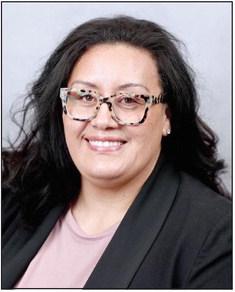
Editor’s Note: Shawnee Kickapoo Martinez has a story to tell. Her only regret is that she didn’t speak her truth sooner. It’s taken her 38 years to be able to talk publicly about her trauma; but she began a journey of healing long before today. By using her voice, unsteady as it may be, she hopes to help others find theirs. As the Indian Child Welfare Director for the Absentee Shawnee Tribe, Shawnee has a mission to help children who are now walking the difficult road she has already traveled; and maybe even help prevent some from ever being put in the path of devastation that affects so many children in our community.
We are ending our series on Child Abuse Awareness Month with a testimonial written from the heart of a woman raised in our community. She carries the weight of the “things we don’t talk about,” and the inexperienced/untrained “professionals” of the past. Her name is our name and a perfect example of how we can choose not to let bad experiences define future progress. She’s still here, standing tall, and fighting for others in a way we wish had been done for her.
Contributed by SHAWNEE MARTINEZ There are moments when silence feels safer than speaking. For years, a little girl lived in that silence. Today, she shares her story— not just as a testimony to pain, but as a beacon of hope and a call to action during Child Abuse Awareness Month.
Her childhood home should have been a sanctuary. Instead, it became a prison of secrets at the age of eight. What began as confusion—touches that felt wrong but she couldn’t understand why—evolved into systematic abuse. By twelve, she was violated in the most intimate way by men who saw her as nothing more than a “consolation prize” of her mother. All while her mother, herself a victim of domestic violence, couldn’t—or wouldn’t—protect the little girl.
She remembered the police visits. The officers who came when neighbors reported shouting, who left without ever speaking to her, the little girl with downcast eyes and too many “accidents.” They never asked the questions that might have saved her years of suffering.
Softball became her escape. For those precious hours on the field, she could just be a child. The weight of her secrets temporarily lifted as she focused on the crack of the bat, the feeling of dirt beneath her cleats. Those moments let her believe, however briefly, that she was normal—that she was safe.
School was another battlefi eld. While other children struggled with reading because of learning differences, the little girl struggled because trauma consumed her mental energy. How can you focus on words when your body hurts and your mind is constantly alert for danger? She showed the signs—withdrawal, inappropriate knowledge of sexual matters, self-isolation—but in the 80’s, in a system not trained to recognize abuse, she remained invisible.
The most painful betrayal wasn’t just from the adults who should have protected her, but from her own body. The physiological responses to touch that felt good while her mind screamed that something was wrong. That confusion followed her into adulthood—how could something so harmful create physical pleasure? It took years to understand that her body’s automatic responses weren’t consent or enjoyment.
When she entered foster care at 12, it wasn’t because someone finally saw the sexual abuse. It was for entirely different reasons, while the deepest wounds remained hidden. Living with her grandparents, she found some stability, but her heart remained tethered to her mother. Despite everything, the little girl worried about her. She loved her. She tried to understand how she could love her and still let predators hurt her.
The journey to healing has been neither straight nor simple. Relationships have been minefields. Too often, people’s judgment came swiftly— why didn’t she fight back? Why didn’t she tell someone? Why couldn’t she choose better partners? Those questions reflect a fundamental misunderstanding of trauma’s grip.
But this story isn’t just about pain. It’s about resilience.
She made a vow that what happened to her would never happen to her own children. She worked multiple jobs, pursued education, and earned her degree. She fostered children who needed safety, understanding what that meant on the deepest level. She became the protector she had needed.
Today, she advocates for children who can’t speak for themselves. She educates native communities about the signs of abuse—the unexplained injuries, the age-inappropriate sexual knowledge, the constant stomachaches, the fear of going home, the sudden changes in behavior. She trains people to ask the right questions and really listen to the answers.
That little girl who suffered in silence? She’s me. And my voice is now my power.
As we mark Child Abuse Awareness Month, remember that survivors walk among you every day. We are your colleagues, friends, and family members. The statistics are staggering— one in four girls and one in six boys will experience sexual abuse before age 18. Behind each number is a story like mine.
Here’s what you can do: Learn the signs of abuse. Physical indicators include unexplained injuries, complaints of pain, and inappropriate clothing for the weather. Behavioral signs include fear, withdrawal, inappropriate sexual knowledge, regression, and changes in school performance.
Create safe spaces for disclosure. Children rarely lie about abuse, but they often test the waters with partial truths to see if it’s safe to tell more.
Believe survivors. The most healing words can be simply: “I believe you, and it wasn’t your fault.”
Support prevention programs in schools and communities that teach body safety and healthy boundaries.
Report suspicions. You don’t need proof to report suspected abuse—leave the investigation to professionals.
If you’re a survivor still carrying the weight of silence, please know this: what happened to you was not your fault. Your body’s responses were not consent. Your confusion was not complicity. You deserved protection.
The cycle of abuse can end with us. It ended with me. Together, we can create a world where children are safe, where signs of abuse trigger immediate protective action, and where survivors find not judgment but understanding.
From that frightened little girl to the advocate standing before you today, I am living proof that your past pain does not define your future potential. My story continues beyond the abuse that once defined me.
And so does yours.
