

“You’re still strong as a community, you still have each other, you still are going to have those amazing bonds.”
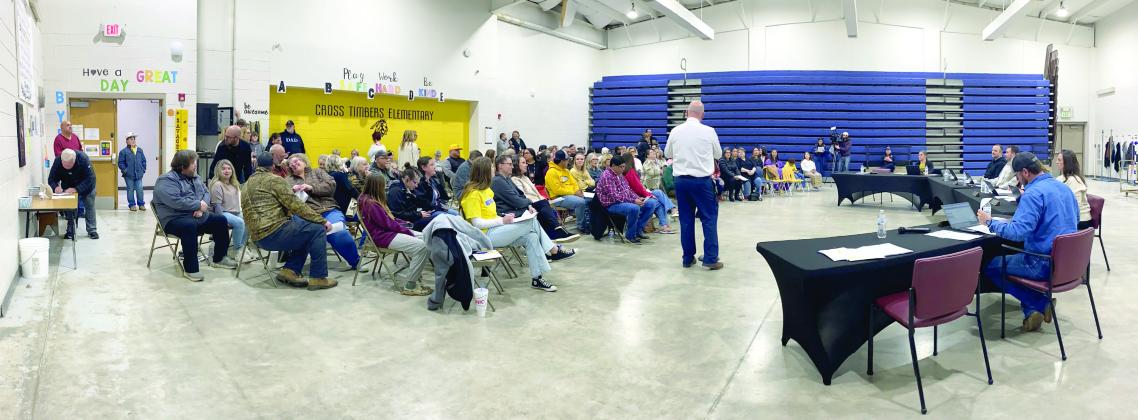
Sparked from a Facebook post requesting support from the community for Victor Cope’s monthly board meeting pleas to eliminate the Savage name, the February Tecumseh school board meeting was standing room only. Although the sign-in sheet only reflected 46 attendees, there was easily twice that many in the room.
This topic was not on the agenda, therefore, the board did not engage or speak on the matter. KOCO 5 was in attendance as well as an officer presence.
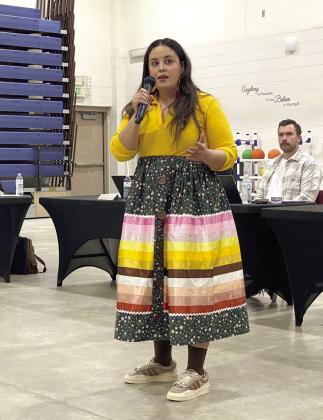
The board heard a wide variety of commentary from 34 attendees (elementary-aged through senior citizen). There were Native and Non-Native speakers both for and against the change. Cope led the charge with opening remarks and asked others to follow suit.
Will Jacoway was the first to speak out against the change. “I am a Tecumseh resident and also a member of the Seminole Nation of Oklahoma… I understand and I respect the opinion of those that may find that offensive, but you know, as for myself and my family, we do not find it offensive and are in favor of keeping the mascot. At my table, it’s a different definition, but I understand where everyone is coming from.”
Dave Narcomey spoke next, saying, “I’m a citizen of the Seminole Nation of Oklahoma. I’ve been involved with this issue of American Indian mascots since 1991 but the struggle has been going on since the 1960s.” He went on to explain, “there are other numerous research papers written on the harmful effects of Indian mascots, and it has been shown that mascots contribute to the negative self-imagery, self-worth, which in turn, becomes a contributory factor of indigenous youth suicides.”
Next, Kimber Davis described herself as “…not just Native American. I’m actually living in this community, paying taxes in this community, serving as a registered nurse in this community. I’m a graduate of OU. I’m Shawnee. It would be unacceptable if I were Asian-American, African-American, and there were derogatory names used with a school that had a high population of Native Americans… what we’re asking, is that you help us celebrate him (Tecumseh) as a Warrior.”
Tesia Zientek described her background as “the founding director for the Citizen Potawatomi Department of Education, where I sat in consultation with several folks in this room getting to advocate on behalf of our native students and how Tecumseh Public Schools spends its money to benefit Native students.” She went on to explain, “This is not merely an opinion or opinion-based conversation. We do have strong opinions, but we also have very strong, a strong body of research that shows that this is harmful to our Native students, the same Native students that all of you in this room care deeply about that the school board helps allocate funding to help support…These have real effects on our students. It contributes to suicide, contributes to negative self- image, and so I ask you to think about on behalf of our students, as protectors, as advocates for our students about these impacts, because they are not savages.”
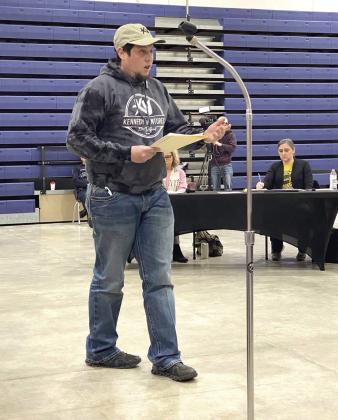
In contrast, Blake Kennedy said, “I’m a proud graduate of Tecumseh High School, 2016. I’m a proud Savage…As many of you know, me and my friends are proud Native American Indians and proud members of the Muscogee Creek Nation tribe. That being said, I’m going to make it very clear that not one individual speaks on behalf of the Native Americans in this town, as well as the Native Americans that graduated from Tecumseh High School… In today’s world, nearly everything, every word, every sign, every gesture, considers to offend someone in some way. That’s the life that we live in today… The savage mascot is not new. It’s a legacy.”
Julie Storie, a former Tecumseh Public School employee explained, “I’m a Savage. I always have been, but that might need to change. I don’t like it…because I would love to be a Savage. But the thing is, when I know I’m hurting a kid’s feeling, or when I know I’m sitting in the stadium stands, and I say, ‘Let’s go Savages’, and I have hurt three people, there might be a problem… The name Savage will not define me. The name Tecumseh does not define me, and it doesn’t define anybody in this room. So if we could make a change, then I’m for it, but don’t sit here and slander everybody in this room, because I’m pretty sure we all have the same goal, and it’s to be kind, it’s to be gracious, it’s to love each and every one of our kids at the school district, because that’s number one.”
Stacy Trout had a different opinion, “the word savage in today’s term, because, as we know, society changes with each generation, is fiercely competitive, confident and unafraid to stand up for themselves… let’s not sit here and say, well, it’s derogatory, it’s hurtful, it’s shameful. It may have been in the generations before, but our children that are coming up, they don’t look at it that way. They are proud to be a Savage.”
Mary Carter, a third-generation Tecumseh citizen and graduate expressed, “And others of us who share in Victor (Cope)’s belief, sadly and shamefully, have not found the courage it takes to speak up in that environment. Is it impossible for us to discuss the issue and consider the opinions of all of us who have deep roots here and who cherish Tecumseh, including people who find the word savage denigrating, even if the majority doesn’t. It is my hope that tonight can be a turning point, the beginning of a respectful, serious conversation in which all points of view may be expressed, engaged and considered.”
Nicole Emmons, the granddaughter of longtime Tecumseh educator, Alva Melot, spoke of her grandfather's wishes.
“He passed away a couple years ago, and he was 103 years old. In the last year of his life, he expressed to me that he thought it was time for a change. You’re still strong as a community, you still have each other, you still are going to have those amazing bonds. And I love Tecumseh.”
Cornel Pewewardy, a professor of political science at the University of Central Oklahoma stated, “I’m one of the newest inductees to the Oklahoma Educators Hall of Fame, and this topic is one of the drivers. I’m an advocate for the elimination of the term savage in this day and age. It’s been a hard 40 years of research that hardly anybody wants to hear.”
Jake Tiger, a member of the Seminole Nation, ended his three minutes by saying, “Take down the name Savage. It’s not 1925 guys. It’s 2025. Catch up with the times.”
Ayani Tebe pleaded, “that you just have some sympathy, be empathetic about it. Just because it doesn’t affect you and it doesn’t destroy your self-image and your kids' daily lives, doesn’t mean that it doesn’t do that to our native children.”
Shannon Dennis, mother of three graduates said, “I wasn’t here when Tecumseh became Tecumseh Savages. I probably wasn’t even born, but I don’t think they picked Savages to mean the slang version of what white man did a long time ago. I think they picked it by the definition. The very first definition of savage is fierce, the next one is severe, the next one is brute.”
Amanda Murray piggy-backed on that by saying, “I just want to tell you guys that all my friends, no matter what racial background they had, we all stood Savage-Strong always…I know my son, he had a lot of different friends as well from different racial backgrounds. And I never remember him one time coming home saying, ‘Mom, I was really upset, because we’re called savages, never, never, ever.’”
Andee Ellis shared a personal story. “Mr. Kinsey, I don’t know if you even remember this, but I reached out to my parents because I had been told I was called a dirty little injun, and then they reached out to you, and you actually made your way to help me out and say, 'What can I do? How can we put a stop to this? Or who was it?' The same actions, but, you know, I dialed it down, because in that moment, not only did he call me a dirty little injun, he called me a savage, a dumb savage. And I figured, why? Why would anybody listen to me, if that’s what the school is called like, what is the point? It is not as impossible as you all make it to seem, just because it’s been so normalized throughout the years.”
Another former student said, “I came here and was welcomed by everyone in this school because they were savages and they didn’t see it as a negative thing. We did not use savages as a negative word, and I know for years it was, but we now use it as a positive. You’re a Savage. You’re not afraid to stand up for what you believe.”
Aldan Vaughn, a former classmate of Cope said, “if you look up the word savage, it doesn’t mention American Indian. There are other races that have been referred to as savage… In any good negotiation. Sometimes there has to be compromise.”
Later, another guest replied to Vaughn’s comments, “But as long as it (Savages) relates to Tecumseh, he’s Native American. That’s what we named this town after. It’s always going to be a derogatory word… You guys talk about it’s going to cost a lot of money to change, but, I mean, we, I’ve seen plenty of times where as a community, we all came together. We can raise that money and get that changed. It’s not, it’s not going to be a big deal, I promise.”
At that point, Cope was overheard explaining that he has spoken to all 39 tribes and they have vowed to assist in the costs associated with changing the name.
Courtney Young asked, “There is nothing wrong with Warriors. Why do we need to be Savages?”
Current Tecumseh High School student, Kadyn Prado said, “Whenever you think of savages, it’s not like, mean, hateful, it’s pride."
Tracy Haney who has fourth-generation grandchildren attending Tecumseh, explained that research “tells a different story. These mascots perpetuate hateful, harmful stereotypes, negatively impact students and fail to respect the rich diversity in native cultures… I urge you to listen to indigenous voices, follow the research and take the necessary step to retire the Savage name and the mascot. Doing so will foster a more inclusive and respectful learning environment for all students.”
Keisha Nolan, a high school employee said, “We talked about how we want change. How about we change our perspective, change our mind, change the way we think about the word savage. Just like the rest of the kids have, they’re proud, they’re happy to be strong, they’re happy to be fierce.”
After her young daughter braved the crowd to speak against the mascot, Andee Ellis stated, “I just want y’all to know that that is my daughter, and that’s who I’m fighting for, for the name change, if she feels that way, you gotta listen to her voice, too.”
Following that, the minor’s grandmother, Mandy Ellis spoke. “I have nothing against any of y’all, but to hear all this hate… I’m trying to bring up my granddaughter to not hate. I hear slurs. I hear from both sides. And the only thing that we were trying to do is respect this man, Tecumseh.”
After more than an hour and a half of back-to-back comments, Board President Iva Bingham closed out the public comments portion of the almost four-hour meeting by saying, “We would like to thank everyone for coming tonight and expressing your opinions and your thoughts on changing or not changing our mascot.”
There was no indication of where the controversy goes from here. The rest of the board meeting is recapped in a separate story on A5.
