


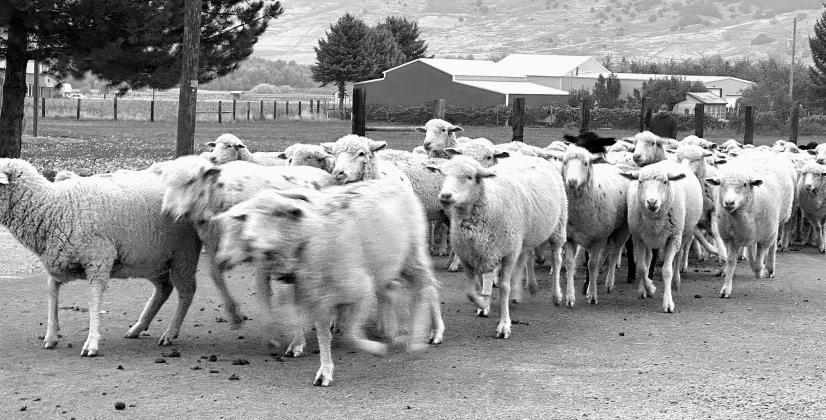
It was just after dawn as a cold drizzling rain dampened our winter coats. The cross street was crowded with cars and people waiting for the annual event called The Trailing of the Sheep.
“Here they come!” came a shout, followed immediately by a scream, “DEER!”
Our heralder scampered for the side of the road as a panicked herd of mule deer stampeded across the intersection into the rural Utah housing community behind where we stood on the curb. I moved behind a tree for safety as two more deer raced passed me. As the excitement of what we’d just seen abated, the clatter of thousands of hooves on pavement reached our ears. The sheep were coming!
An important commodity to the original settlers of Cedar City in 1851, livestock has been a big part of the area’s economy. Sheep became the dominant animal raised in these Utah mountains due to forage that was much better suited to sheep than cattle, plus they were small and easy to work with, and provided meat and fiber for clothing.
While most sheep ranchers, commonly called woolgrowers, have been forced to truck their sheep between summer and winter ranges, the Eph Jensen Livestock Co. continues the tradition of walking them the 25 miles over two days in honor of their founder and grandfather, Eph Jensen.
A group of fourth-generation shepherds from the company surrounded the flock of approximately 2300 wooly ovine to guide them on their 95th annual jaunt from the foothills of Mantua, Utah through Brigham City to the herd’s winter grazing grounds in the fields near Bear River City, Utah.
Without much straying, one sheep follows another, nose to butt, as the flock moves as one unit nibbling fall foliage lining the streets and leaving droppings along the way. The Southbound lanes of a major highway and city roads were closed off to traffic as people flock from miles around to witness the happening that began in the late 1920s, before asphalt.
The notoriously mellow animals cause no real problems except for their droppings, but those were gone by noon of the same day due to rain and a good clean-up crew. Sheep aren’t aggressive, but some do tire and begin falling behind. That’s when the sheep dogs and shepherds on horseback keep them moving forward to complete the two-day journey. Only a few police officers in patrol cars were deployed to keep intersections clear of traffic along with one car clearing the path for the herd.
Some local herds still use the designated sheep trail both Spring and Fall, but many only “trail” in the Fall due to the difficulty of the steep trail on the young Spring lambs just after their births.
With 95 years of tradition and honor behind this Trailing of the Sheep comes a deep pride in community. While many Utahns aren’t involved in agriculture, there is a growing interest in staying connected to the people and culture behind local food. Rural communities such as Brigham City and Cedar City are not only attracting visitors to their hotels and restaurants, but they are also supporting family farms and ranches while preserving and celebrating the living history of the trailing of the sheep.
The mule deer don’t always precede the sheep herd, but this year’s flock scared them out of the canyon and into the community; we considered it a bonus. The locals suggested not trying to count the sheep, otherwise, we might fall asleep and miss it all. And just like that, the sheep were gone!
