

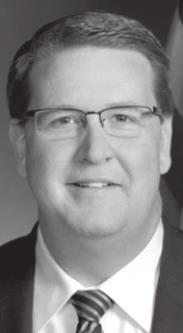
The weather played havoc with our legislative schedule this past week. Heavy sleet causing unsafe driving conditions, making it too dangerous to meet on Wednesday and Thursday. While the weather is certainly beyond anyone’s control, I was extremely glad we’d adopted our new schedule that made it possible to hit the ground running from the first week of session. We’re in much better shape to absorb this pause in action and then resume the momentum we’d begun.
By the end of Tuesday, which marked our 10th day of floor sessions, the full Senate had approved 56 measures. At that point in the session last year, we’d approved 28 bills. I think this shows the new approach I’ve taken on committee and floor schedules is working, and that’s going to help ensure a more even workflow throughout the legislative session, even with unforeseen weather events, like this past week.
One of the measures we approved last year was called the No Patient Left Alone Act, which allowed hospital patients to designate a guest to have unrestricted visitation regardless of an emergency declaration by the governor or Legislature. This year, we approved Senate Bill 1096, which would add pastors, ministers, spiritual advisors and other religious leaders to the approved list of visitors for patients hospitalized during a declared health emergency. If you’ve ever had a loved one in the hospital, you know how important it is to have someone there to advocate for them. Having spent several years as a hospice chaplain, I believe it’s just as important to ensure patients have access to someone who can provide spiritual comfort and counsel when hospitalized.
We also gave full approval to SB 1569, which would create the “Address Confidentiality for Child Survivors and Their Families Act.” For nearly two decades, the state has had a program to provide victims of domestic violence, sexual assault and stalking with a substitute address that can be used for enrolling children in public schools, for driver licenses, social services, child support, court documents and more. The idea is to ensure their abuser can’t locate their victims through government records. SB 1569 would add victims of human trafficking and child abduction to those eligible to take advantage of this program, which is administered by the attorney general’s office.
In 2021, we approved legislation to better protect members of law enforcement from doxing—that’s the practice of posting personally identifiable information online with the intent to threaten, intimidate or harass someone. This year, we’ve built on that with the passage of SB 1522, which give retired law enforcement officers protection from doxing as well.
These policy bills now move to the House of Representatives for further consideration.
This past week, the State Board of Equalization made it’s final certification as to how much revenue will be available for the Legislature to appropriate for Fiscal Year 2023, which begins July 1. Revenues have continued to grow, and our economy is strong, and as a result, the BOE certified $10.49 billion would be available to appropriate, up from the $10.3 billion in their initial certification last December. But it is critical to note that nearly $1.3 billion includes one-time carryover funds and special cash from previous sessions.
Without a doubt, our economy has been bolstered by federal pandemic dollars, and higher oil and gas prices. But with those higher energy prices, we’ll also be facing higher costs to all state agencies and throughout our educational system. Furthermore, we know high energy prices will at some point go back down. It’s important we take a fiscally conservative approach in our spending and add to our savings so that in future years, we’re not forced to make dramatic cuts to services. Being disciplined now will leave us in a much stronger economic position in the years ahead.
I am honored to serve you in the Oklahoma State Senate. If you have a question about a legislative matter, please do not hesitate to contact my office at (405) 521-5541 or by email at Greg.McCortney@oksenate.gov.
