

Child abuse is a heartbreaking reality that affects countless children every year. But behind every case, there is hope — a network of professionals working tirelessly to protect children and help them heal.
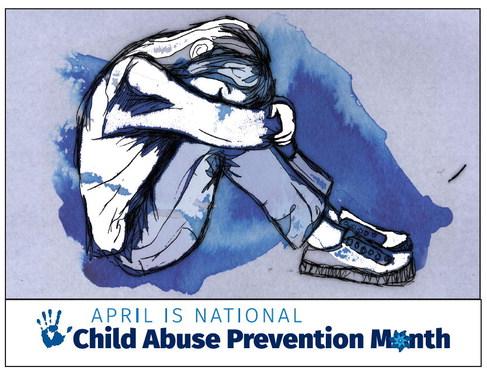
April is Child Abuse Awareness Month, a time to recognize the importance of protecting children and ensuring they have a safe, supportive environment to grow. Each case has a multidisciplinary team (MDT) that includes social services, forensic interviewers, mental health, child advocacy centers, and prosecutors who work together to bring justice, safety, and healing to young survivors. Their efforts make a difference, one child at a time.
In Pottawatomie and Lincoln County, the Child Advocacy Center of Central Oklahoma (CACCO) coordinates the meetings of the MDT for case reviews where the various professionals can discuss the progress on each case and maintain a coordinated effort to stop the abuse and neglect of the children.
In a recent visit by the CACCO Director Kaycee Campbell with the Lifetime Learners, Campbell said, “If you want to see a big change and a big impact in our community on the number of people sitting in our jail cells, the number of homeless people walking these streets, the number of kids that are sitting in DHS custody, the addicts that are going to Gateway, it starts at the Child Advocacy Center. It starts with responding appropriately to these horrific incidences that are happening to our most vulnerable and making sure that their needs are met, justice is served, and that those bad guys go away. Then we need to meet them with mental health services on the other side to begin that journey of healing."
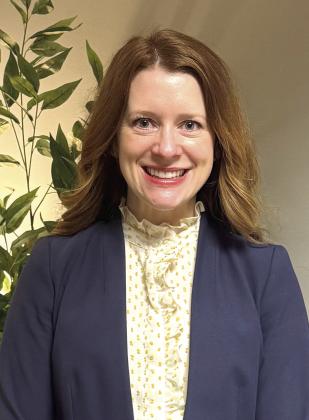
This week the Countywide & Sun visited with Assistant District Attorney Lori McConnell.
McConnell said a career as an attorney is perfect for her because it allows her to use her love for writing and her “natural bossy personality.” She said she “found her passion in the Special Victims Unit (SVU) during a summer internship at the Oklahoma County District Attorney’s Office. I was interested in being a prosecutor, just because I really wanted to punish bad people for doing bad things and help people who’d been hurt by them."
After graduation, McConnell was hired by the DA’s Office, but she started with misdemeanors before transitioning to the SVU in 2013. "In January 2013…I transitioned to the Special Victims Unit. I was really green, but I got it, and I am so thankful I did, because not only do I really love getting to deal with children as part of my job, but I really love prosecuting these crimes," said McConnell.
McConnell said she had the opportunity to work hand in hand with attorneys who were really good at their jobs and knew what they were doing.
“I love prosecuting these kinds of crimes because I think there’s a hope to it that isn’t present in any other type of prosecution,” said McConnell. “Children survive some of the most horrendous things that we could ever imagine, and then you speak with them, and they’re so resilient, especially if they have a support system that helps them deal with that trauma.”
In January 2023, McConnell came to work for District 23 District Attorney’s office which covers Lincoln and Pottawatomie counties.
Campbell likes to share a little information on the effectiveness of McConnell’s prosecution abilities stating regarding a recent case, “Danny Weeks was sentenced to more years than Ted Bundy, as far as life sentences go, by McConnell. She’s an incredible individual."
McConnell and Countywide & Sun Publisher Suzie Campbell went through a series of questions to gain a better understanding of her role as a prosecutor.
Q: What are the biggest legal hurdles in prosecuting crimes perpetrated against children?
A: To prevail at jury trial, I have to be able to prove my case beyond a reasonable doubt. Having enough evidence to be able to meet that high legal burden is tough in these cases. Often children don’t disclose until many years after the abuse occurred, and it’s sometimes very difficult for an investigator to find corroborating evidence when a crime occurred several years before.
I’ve had many cases where victims do not disclose child sexual abuse until they are adults. It can be frustrating because, even in cases with an overwhelming amount of evidence, I am sometimes legally prohibited from filing criminal charges in those situations due to the statute of limitations having run (out).
I have also (run) into issues in prosecuting physical child abuse and child neglect cases where a child is still residing in the home with the offender. It can be very difficult when the perpetrator brings the victim to court with them, and your only access to the victim has to go through the perpetrator. In those situations, sometimes perpetrators don’t bring their children to court at all, and my only recourse is to make a DHS referral. When a perpetrator doesn’t want their child to tell the truth in court, I am very concerned about the child’s safety.
Q: What strategies do you use to make child witnesses feel comfortable in the courtroom?
A: Before any child testifies in a criminal case in this district on behalf of my office, the prosecutor always meets with them to prepare them for the court process. Depending on the age of the child, the testimony preparation can look different. But generally, it is a good time for the prosecutor to build rapport with the child. The child can view the courtroom he or she is going to testify in if they wish, and the child can ask any questions they have about the court process or the case. I firmly believe this pretrial meeting is vital to being successful in the courtroom and also necessary to respect the child and their needs. It is also a good time for me to assess if any type of alternative courtroom arrangement may be appropriate. Sometimes something simple like a child just having a comfort item like a stuffed animal or fidget toy can help calm their nerves when they testify.
Q: What legal protections exist for children who are victims of abuse?
A: A child’s parent or guardian can petition the court for a protective order on the child’s behalf. There are many resources in our community to help with this process. If the offender is convicted, there are some situations where an offender can be prohibited from having any contact with the child as well.
Q: What role do forensic interviews play in strengthening your cases?
A: Generally, a forensic interview is the most reliable statement from a child about their abuse. A forensic interview is conducted by an individual who has training and experience in asking age-appropriate, non-leading questions to children in a neutral child-friendly setting. In the courtroom, I am an advocate for justice for that child. My questions to a child are not neutral. They are designed to illicit information that the child has shared with others and with me previously. The jury knows this. But when they view a forensic interview that is admitted into evidence, they have the chance to see the child disclose their abuse in the most neutral setting.
It is imperative that we give children this opportunity to share their experiences when there has been an allegation of abuse or neglect. It is the best way to assess the safety of a child and to reduce the risk of further trauma from an interview from an untrained individual. Any law enforcement investigation and every DHS investigation should utilize forensic interviews. There is no substitute.
Q: How do you work with forensic experts to explain complex medical or psychological findings to a jury?
A: Often child victims may have behaviors that might seem counterintuitive to a jury. Maybe they still love their perpetrator. Maybe they perpetrated on other children or acted out sexually, and that’s how their abuse came to light. Maybe they had a mental health crisis after the abuse. Maybe they were interviewed previously and did not disclose abuse, but then came forward after they had been removed from their perpetrator’s care and were in a safe place. Forensic interviewers have knowledge of research and studies and unique experience that can help explain them to a jury. What may at first seem counterintuitive may actually be strong evidence to support the State’s case.
I also utilize testimony of sexual assault nurse examiners to help explain medical findings to a jury. Children who allege certain types of abuse often have a sexual assault exam. Many lay people believe that there is a definitive way to look at a child’s body and determine if they have been raped. However, the science shows that this is not the case. These medical professionals are vital in helping explain genital anatomy and educating a jury about how rare genital injuries are and how fast injuries may heal. One research study that I often ask these medical professionals about at jury trial examined pregnant teenagers and found that the overwhelming majority still had intact hymens! Information like this is critical to dispel common myths that people may have about the human body.
Q: How do you ensure the child’s best interests are represented throughout the legal process?
A: It’s important to not assume that we know what they want or need. You have to have age-appropriate conversations with them about their expectations and needs. And you have to really listen to them when you have those conversations.
Q: What measures do you take to prevent re-traumatization of child victims during testimony?
A: I addressed the importance of preparing a child to testify in Question 2. I think that is the first and most important step. I also think it’s important to empower the child. If they need a break, we take a break. If they are uncomfortable saying a certain word, we don’t say it. If it is easier for them to use drawings to share their story, I bring markers and paper.
I also find that it sometimes helps children to heal when they are involved in the court process and are able to see that a jury or judge believed them and held their perpetrator accountable.
Q: How do recent changes in laws or policies impact the prosecution of crimes against children?
A: The child hearsay law was recently amended in the State of Oklahoma. The child hearsay law used to allow for individuals to whom a child under the age of 16 disclosed abuse to testify in court about what the child told them about the physical abuse or sexual abuse the child suffered. This is the law that allows forensic interviewers to testify in court about a child’s disclosure of abuse.
However, the law had some huge gaps. A child sibling who witnessed their brother or sister’s abuse at the hands of a caregiver had to come in and testify in court without their testimony being supported by their prior statements. Similarly, a child who disclosed witnessing domestic violence in their home would have to testify without the support of child hearsay. A child who was neglected in horrific ways by their parents (example: locked in his or her room for years; starved; denied medical attention for serious injuries like burns and gunshots) would have to testify without the support of child hearsay.
Now, the child hearsay law allows child hearsay in almost any crime that is perpetrated on a child and almost any violent crime witnessed by a child. This will make a huge difference in ensuring that criminal prosecutions are successful and offenders are held accountable.
It should help ensure law enforcement and DHS are utilizing forensic interviews for children who may have been victims of or exposed to any type of abuse or neglect. My hope is that we will be able to be more proactive about child safety decisions and lessen child victimization by involving the forensic interview process in more cases.
Q: What can be done to improve the legal system’s response to child abuse cases?
A: We need more accountability. Law enforcement, DHS, prosecutors, etc…we all make decisions every day that greatly impact the lives of children. We need to be accountable to each other and to the community to ensure that we are making good decisions. Transparency and the willingness to engage in meaningful discussion with other professionals on the multi-disciplinary team and the families affected by our decisions is critical.
